Cybersecurity: Why It’s the Biggest Business Risk Today
In the ever-changing digital economy, cybersecurity 2026 is not just a technological requirement; it is a business imperative for survival. Businesses around the world are dealing with an increasing threat of cyber threats for businesses, and business cybersecurity risk is one of the biggest challenges that businesses face today.

The Rise of Cybersecurity Risks in 2026
Why Business Cybersecurity Risk Is Increasing
The True Cost of Ignoring Cybersecurity
If cyber threats to businesses are not taken seriously, the consequences can be devastating. Not only do cyber attacks interfere with business operations, but they also have lasting effects that are hard to overcome. Some of the major effects include:- Financial costs
- Legal problems
- Damage to customer trust
- Operations downtime
Cybersecurity Strategies Every Business Needs
To overcome the challenges of cybersecurity 2026, businesses must take a proactive and systematic approach. Cybersecurity strategies are vital to reduce risks and increase stability.- 1. Invest in Digital Security Solutions: Digital security solutions such as firewalls, encryption, and artificial intelligence monitoring solutions are vital in identifying and preventing threats in real time.
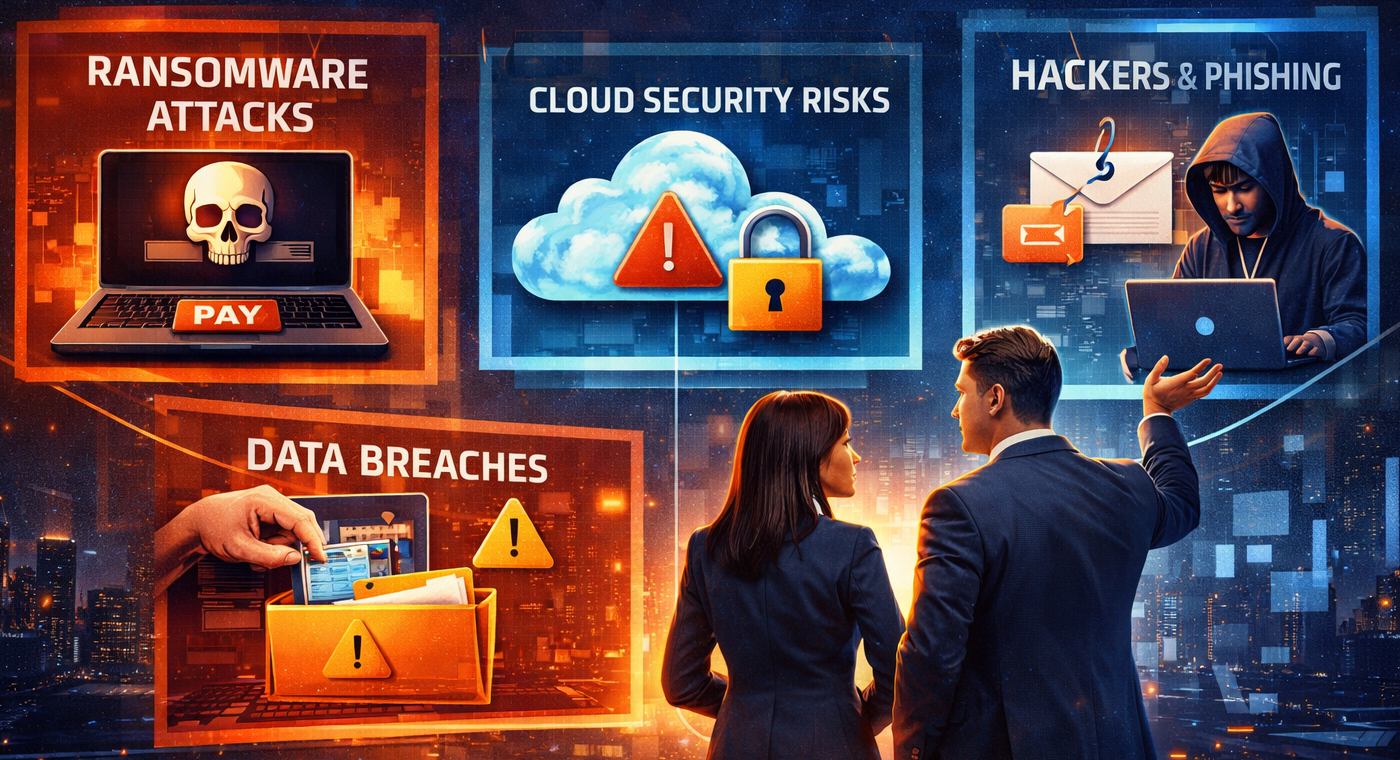
- 2. Prioritize Data Breach Prevention:Effective access control, data backup, and data handling are important aspects in data breach prevention.
- 3. Address Cloud Security Risks:With the increasing popularity of cloud computing, businesses must be aware of cloud security risks and implement adequate measures.
- 4. Strengthen Cyber Attack Prevention:Employee training and awareness are important in cyber attack prevention, as human error is one of the major causes.
- 5. Prepare for Ransomware Attacks: Having a robust backup and recovery plan can significantly reduce the impact of ransomware attacks.
The Future of Cybersecurity
As we look forward to the future, cybersecurity in 2026 will continue to be shaped by the evolution of technology. Businesses that recognize the importance of cybersecurity and invest in top-notch security measures will be at a competitive advantage. Trust is emerging as a new differentiator, and companies with top digital security solutions will be at an advantage.Conclusion
While technology is a key aspect of the rising threats to businesses' cybersecurity, it is, in fact, a matter of trust and confidence between a company and its customers, where a single event is enough to destroy a brand's trust and confidence forever. Thus, in such a scenario, cybersecurity is no longer just about cybersecurity; it is about a powerful force in building customer and investor confidence and trust.
At the same time, however, the emergence of ransomware attacks and the increase in cloud security threats underscore the level of vulnerability that modern business models have exposed themselves to. Digital transformation strategies have indeed opened up tremendous opportunities, but they have also brought with them a plethora of challenges that are equally sophisticated in nature. It is in this context that a change of mindset from reactive defense to proactive prevention of cyber attacks is required.
Cybersecurity strategies are no longer optional, but an essential component of any business growth strategy. Businesses that are investing in sophisticated digital security solutions, data breach prevention, and cultivating a culture of awareness among their employees are not only securing their future but also gaining a competitive edge in the marketplace.
Furthermore, cybersecurity must not be viewed as a cost center but as an investment in stability and future readiness. This way, businesses that integrate cybersecurity within their operations can innovate with confidence, grow without fear, and build long-lasting relationships with their customers and stakeholders.
In conclusion, cybersecurity is the biggest threat and opportunity in 2026. Businesses that fail to take it seriously may be out of business in the near future, while those that take it seriously as a key business strategy are set to succeed in an increasingly digital and competitive world. The future belongs to businesses that are not just digital but also secure.