Common Mistakes in Group Discussions and How to Avoid Them
Group Discussions (GDs) are now an essential component of the selection process for business schools, corporate positions, and competitive exams. Unlike written assessments that focus solely on knowledge, GDs assess various attributes, including clarity of thought, communication skills, leadership, teamwork, listening abilities, and quick thinking. However, many intelligent and knowledgeable candidates struggle in GDs due to easily avoidable mistakes. Let's explore the six most frequent errors made in Group Discussions and discover effective strategies to prevent them.
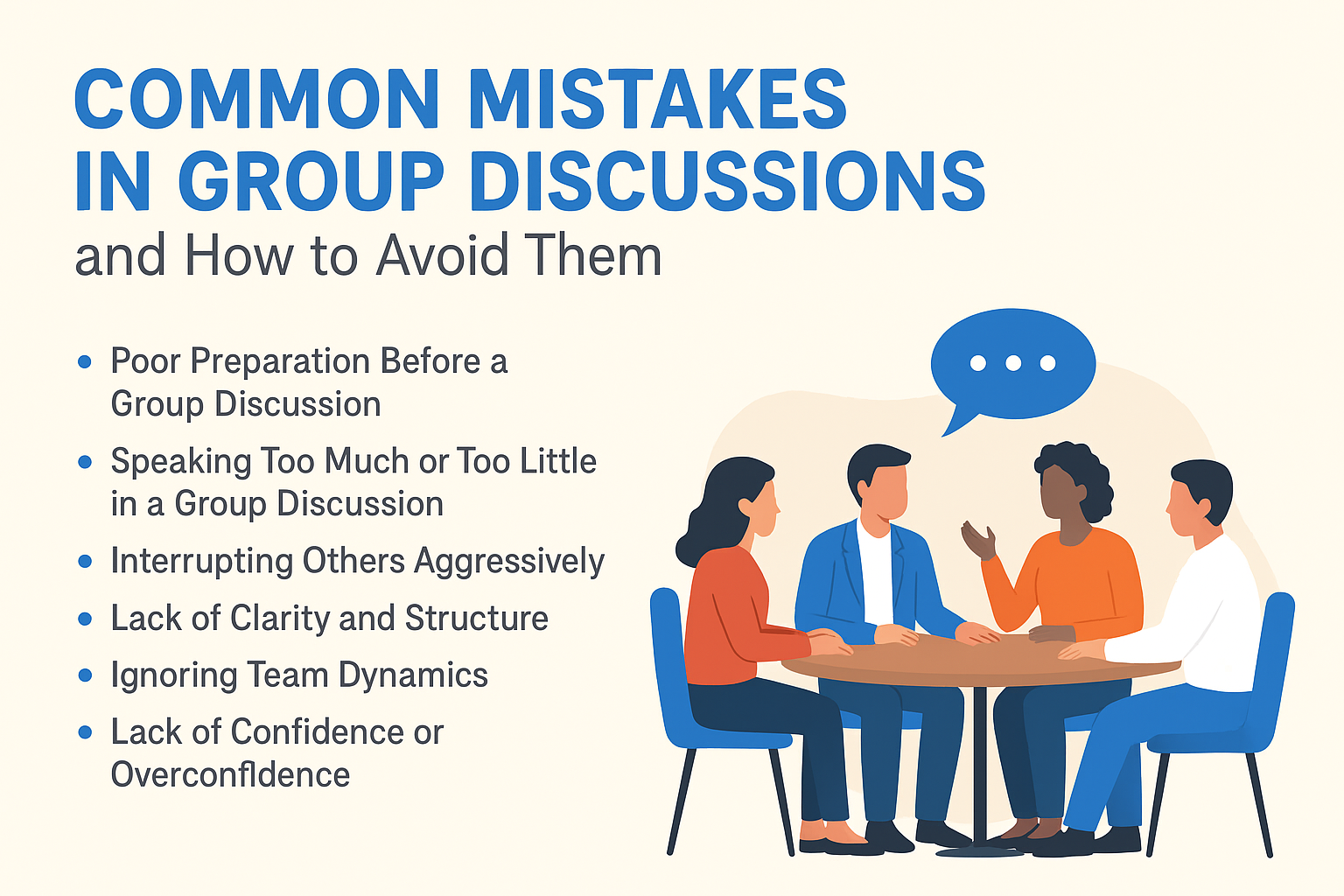
1. Poor Preparation Before a Group Discussion
- Staying updated with current affairs: Read newspapers, watch debates, and follow trending issues. Topics on business, politics, technology, and social change often appear in GDs.
- Practicing with common GD topics: For example, “Is Artificial Intelligence a threat or an opportunity?” or “Should social media be regulated?” Regular practice builds confidence.
- Structuring your thoughts: Organize points into an introduction, main argument, and conclusion to sound logical and impactful.
- Using facts and statistics: Back your opinions with real data or examples to sound credible. For example, while discussing climate change, citing UN or IPCC reports makes your point stronger.
2. Speaking Too Much or Too Little in a Group Discussion
- Be clear and impactful: Present your ideas succinctly and avoid unnecessary repetition. Well-structured, brief arguments tend to leave a stronger impression than lengthy, vague ones.
- Don’t stay silent: Even if you’re uncertain, aim to make at least 3–4 meaningful contributions during the discussion. Staying quiet may suggest a lack of preparation.
- Listen actively: Effective participants know when to contribute and when to listen. Recognize others' points and enhance the conversation, rather than just focusing on asserting your own views.
- Use polite entry phrases: Instead of interrupting, wait for a natural pause and say something like, “I’d like to add to what you just mentioned…” This approach shows respect and keeps you engaged in the discussion.
3. Interrupting Others Aggressively
One of the common errors candidates make in a group discussion (GD) is interrupting others in a rude or aggressive way. Many participants believe that frequently interjecting will make them seem confident, but it actually leaves a negative impression. Evaluators often view this behavior as disrespectful, impatient, and indicative of poor teamwork skills.- Wait for the right pause: Rather than interrupting someone while they're speaking, allow them to complete their thought or pause before you add your input.
- Use polite interjections: If you have something important to add, you can use phrases like “Sorry to interrupt, but I’d like to share a quick point” or “May I add to what you just mentioned?”. This demonstrates respect and helps you stay involved in the conversation.
- Acknowledge others’ ideas: Before sharing your opposing view, recognize the speaker by saying, “That’s an interesting perspective, but I have a different viewpoint…”. This helps to foster a positive atmosphere.
- Stay calm and composed: Regardless of how strongly you disagree, it's important to maintain a polite and professional tone. Being aggressive is not beneficial in a group discussion.
4. Lack of Clarity and Structure
A frequent error in group discussions is the lack of clarity and structure in speaking. Many participants jump in as soon as they have the opportunity, often leading to rambling, reiterating the same points in various ways, or using complex terminology that can confuse others. This not only dilutes their argument but also makes it difficult for evaluators to understand their perspective.- Think before you speak: Take a few seconds to organize your thoughts before jumping in. A short pause for clarity is better than rambling.
- Use a simple structure: Start with an introduction, present your argument with an example or fact, and end with a short conclusion. For example, “Firstly… For instance… Therefore…”
- Avoid jargon and filler words: Phrases like “umm,” “you know,” or heavy technical terms without explanation make you sound less confident.
- Stick to the topic: Don’t wander into irrelevant points just to keep speaking. Stay focused on the subject being discussed.
- Be concise and impactful: Make your point in 30–40 seconds and let others contribute. This shows respect and keeps the discussion flowing.
5. Ignoring Team Dynamics
One common mistake candidates make during group discussions (GDs) is concentrating solely on their own contributions while neglecting the overall team dynamics. Some participants believe that GDs are an opportunity to showcase their knowledge, speak the most, or dominate the conversation. However, evaluators are not only assessing your knowledge; they are also evaluating your ability to collaborate, respect differing viewpoints, and foster a constructive discussion.- Listen Actively: Listen to what others are saying and expand on their thoughts rather than just restating the same concepts.
- Acknowledge Contributions: Use phrases like, “I agree with what she mentioned about…” or “Building on his point…” to show respect.
- Encourage Quieter Members: If a person hasn't contributed much to the conversation, you can kindly encourage them to share their thoughts. This demonstrates both leadership and a commitment to inclusivity.
- Don’t Dominate: It’s good to be confident, but let everyone have a fair chance to participate. Balance your speaking time.
- Stay Collaborative: Focus on leading the group to a shared understanding instead of constantly trying to prove your point.
6. Lack of Confidence or Overconfidence
- Work on body language: Sit upright, maintain eye contact, and use natural gestures. This shows confidence even before you start speaking.
- Practice your tone and volume: Speak clearly and loudly enough to be heard, but don’t shout or sound aggressive.
- Prepare beforehand: Confidence comes from preparation. Read about current affairs, practice with mock GDs, and stay informed about common topics.
- Be assertive, not aggressive: Put forward your views firmly but politely. Respect other participants even if you disagree.
- Accept others’ ideas: Confidence doesn’t mean rejecting others—it means contributing your thoughts while valuing different perspectives.
Conclusion